 A Network of People Building Peace
How can local peacebuilders collaborate with environmental experts? 3 lessons from Central Asia
In Central Asia, climate change rarely makes local headlines. While its effects are increasingly visible and felt, the connection to climate change often remains abstract for many people, including those working on conflict prevention and community resilience. As a result, climate-related risks are not always recognised or addressed as part of peacebuilding efforts. There are three main reasons for this. First, people still see changing weather as something temporary, assuming that “next year will be normal again.” Second, following the adoption of the Paris Agreement, the 2015 international climate treaty, Central Asian governments developed National Adaptation Plans to respond to the growing impacts of climate change. Yet, while important, these documents are often long, highly technical, and disconnected from the everyday realities of local communities. Third, when climate change does appear in the news, it is usually framed around global summits, international negotiations, or major political announcements, making it feel distant from the day-to-day concerns of citizens.
How climate change is perceived as a “foreign agenda”
Climate change is often perceived by local communities as a “foreign agenda” rather than an issue directly connected to their own realities and lived experiences. This perception is reinforced by the fact that international donors, development organisations, and environmental actors work closely with Central Asian governments to support the transition towards a green economy, while rarely engaging directly with local communities themselves. This can lead people to perceive climate action as externally driven rather than locally rooted and owned.
However, this also created an opportunity for local peacebuilders such as GPPAC member the Foundation for Tolerance International (FTI) in Kyrgyzstan. FTI saw a strategic gap to bridge between climate expertise and local realities. By collaborating with climate experts and drawing on its long-standing experience in conflict prevention, FTI helped advance climate-sensitive peacebuilding in ways that felt relevant and meaningful to local communities.
How climate exchange affects the Ferghana Valley
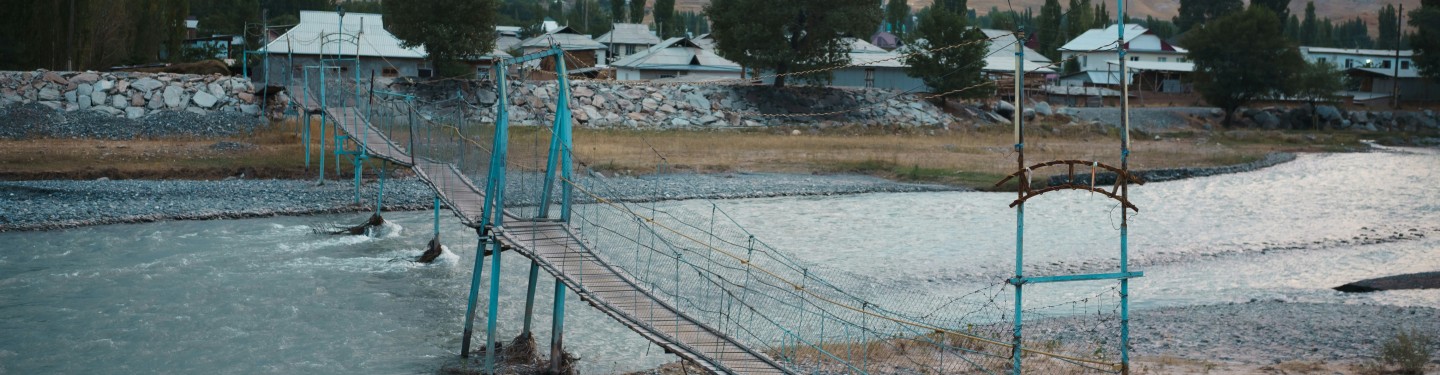
FTI works in the Ferghana Valley, among other places, stretching across Kyrgyzstan, Uzbekistan, and Tajikistan, where water from rivers flowing through the valley is essential for agriculture. However, it is also a source of tension in a region marked by cross-border disputes and competition over natural resources. And climate change is starting to affect how water flows. For instance, glaciers start to melt earlier in the year, making water availability less predictable during the farming season. Disputes over water access have already led to tensions and even violent clashes in the region. However, many communities experiencing these changes do not connect them to climate change. That’s why FTI started working on climate-sensitive peacebuilding to help communities better understand the links between climate change, water scarcity, and conflict, while preventing tensions from escalating in the Ferghana Valley.
Local peacebuilders collaborating with climate experts
Instead of trying to become climate experts themselves, FTI partnered with one. They reached out to someone they already knew, a trusted woman peacebuilder in their network who had pursued climate research in academia. The partnership was built on complementarity: the climate expert brought technical expertise, while FTI contributed its experience working with communities and preventing conflict. Through this collaboration, FTI became more familiar with climate science and terminology, while the climate expert gained a deeper understanding of community realities. Today, they host dialogues across the Ferghana Valley, avoiding complex climate jargon and instead asking simple questions such as: What was the water situation like ten years ago? What do people observe today? These conversations help communities connect changes in water patterns to climate change and explore solutions together to prevent future conflict over access to water.
FTI also started connecting young people with climate experts through environmental education activities. Young people learn more about climate-adaptive approaches and are encouraged to share what they learn with their families and promote small, daily changes in their communities. This investment in young people is particularly important, as they will be the generation living with the impacts of climate change the longest.
The partnership also helped bridge the gap between local realities and policymaking. FTI now engages with scientists and national authorities, including the Ministry of Emergency Situations of the Kyrgyz Republic, while bringing community perspectives into these discussions. By speaking the language of both sides, FTI helps ensure that climate adaptation policies are informed by local realities and needs.
Three lessons for peacebuilders who want to collaborate with environmental experts:
- Tap into your existing relationships: FTI’s collaboration with environmental experts started through its network. As local peacebuilders, you often already know people working in different sectors or across disciplines, including academia. Reaching out to these contacts can be the easiest way to start collaboration.
- Learn each other’s language: Climate science can feel technical, but so can conflict prevention. Learning some fundamental terminology helped FTI build credibility with environmental experts and decision-makers. At the same time, it also helped them better translate scientific concepts into language that communities could relate to.
- Acknowledge your role as peacebuilders: You do not need to become a climate expert. Your strength lies in your ability to bring people together across sectors and divides. You can connect scientists with communities, facilitate inclusive dialogue, and help different perspectives understand each other.
FTI’s experience shows the value of collaboration between peacebuilders and environmental experts. By combining their expertise, they can help ensure that climate responses are both grounded in science and responsive to the realities and needs of the communities most affected.
Related highlights