 A Network of People Building Peace
Bangsamoro parliamentary elections in the Philippines: What is at stake for peace?
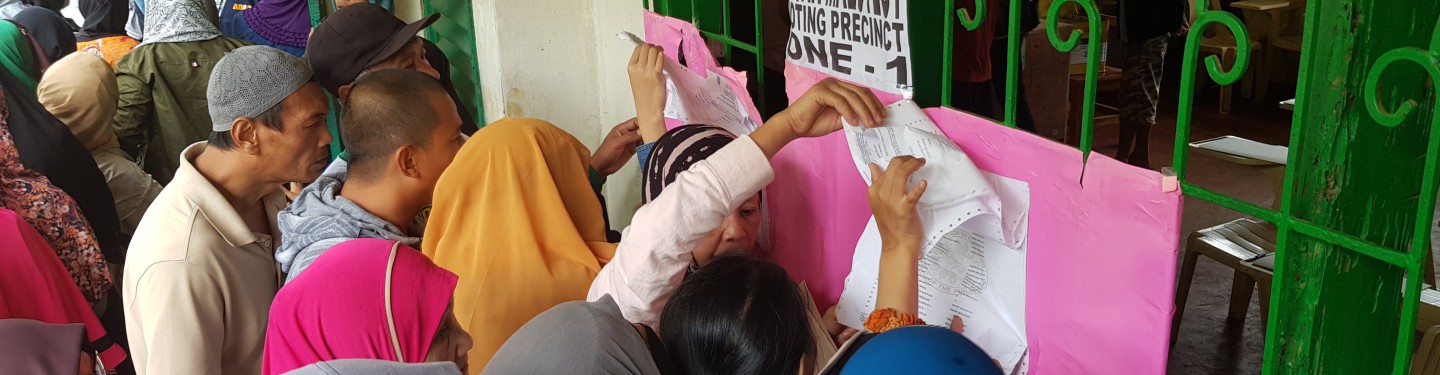
As the Bangsamoro Autonomous Region in Muslim Mindanao (BARMM), in the southern Philippines and home to around 4.5 million people, approaches its parliamentary elections on 14 September, this is an important moment in a peace process that has sought to resolve decades of armed conflict through dialogue and political settlement.
For years, GPPAC members in the Philippines and across Southeast Asia have worked with communities and other actors to support dialogue and the Bangsamoro peace process.
A peaceful, credible and inclusive electoral process will be important. All voters need to be able to participate freely and without fear, with all actors exercising restraint and respecting the integrity of the process. Security arrangements need to create an environment in which people feel safe to vote.
Elections that take place peacefully, with broad participation and confidence in the process, and whose results are respected by all parties, can strengthen peace and security in the daily lives of people and communities across the Bangsamoro Autonomous Region and contribute to broader stability in the Philippines.
Zahid Mövlazadä
Executive Director
Global Partnership for the Prevention of Armed Conflict
____________
BARMM elections is a vote for a peaceful, democratic and a self-determining Bangsamoro
Read below the press statement issued on 13 September 2026 by by Initiatives for International Dialogue (IID), GPPAC’s Southeast Asia Regional Secretariat.
Tomorrow, September 14, will be a historic day.
For the Bangsamoro. And for the entire country.
After several delays, the first parliamentary elections in the Bangsamoro Autonomous Region in Muslim Mindanao (BARMM) will finally be held tomorrow, September 14, ending the transition period which started in 2019. This will allow more than two (2) million registered voters to redefine the Bangsamoro’s future marked by centuries-old conflict, marginalization and social injustice.
Tomorrow’s BARMM elections is a byproduct of the Bangsamoro people’s long struggle, decades-long peace processes and peacebuilding supported and accompanied by peace movements, people’s and grassroots communities and various civil society groups and platforms from Mindanao, in the entire nation and even internationally. If successful, the elections can serve as a prototype for the conduct of such and of governance in the country, and even other societies with peoples and communities confronting similar struggles for peace, justice and assertions of self-determination.
For members of civil society and peacebuilding movements, the goal is beyond determining the structural set-up of the Bangsamoro government as defined under the Bangsamoro Organic Law, or Republic Act (RA) No. 11054. The elections must provide opportunities for the Bangsamoro people to chart their own democratic future and address historical injustices as enshrined in the Comprehensive Agreement on the Bangsamoro (CAB). To realize this, there has to be a radical shift in both regional and national policies and programmes to pave the way for an inclusive and people-led peace and development framework.
The Initiatives for International Dialogue’s (IID) supports a peaceful, safe, honest, and credible first BARMM Parliamentary Election. As IID is also part of the larger peacebuilding movement in the country, we are equally wary and concerned over reports of a very heavy military presence in the region amid the election period.
We therefore gently remind both the national and regional military commands and forces to be mindful of not creating a hostile environment, and to carefully reframe their security accompaniment and protocols in the elections to avoid causing intimidation, harassment and fear among the communities and voters. A military security protocol should aim to protect the sanctity of the elections and not to jeopardize or undermine the electoral process. The BARMM elections is first and foremost a democratic political exercise that does not warrant the presence of heavy artillery and men dressed in full
battle gear.
We likewise appeal to the Moro Islamic Liberation Front (MILF) to stand down their own forces; the Bangsamoro public, election monitors and the media to help in protecting the electoral process by calling out any attempts by any camp, political party or group to spoil the first BARMM parliamentary election.
Today, we stand in total solidarity with the Bangsamoro people in their continuing pursuit for a peaceful, democratic and self-determining Bangsamoro region.
Mabuhay ang Bangsamoro! Mabuhay ang Pilipinas!
In Shaa Allah!
____________
Duyog Bangsamoro: Peace coalition warns heavy military presence could deter BARMM voters
Read below the press release issued on 12 September 2026 by Duyog Bangsamoro, a multisectoral peace coalition in the Philippines convened by Initiatives for International Dialogue (IID), the GPPAC Southeast Asia Regional Secretariat, along with its partners.
“A low voter turnout because of fear would undermine the very purpose of the elections and put doubt on the promise of the peace process.”
Reports of heavy military presence in the Bangsamoro Autonomous Region in Muslim Mindanao (BARMM), particularly in Lanao, ahead of the Bangsamoro Parliamentary Elections on Sept. 14 are fanning fears of a low voter turnout.
We recognize that the national government may consider this necessary to maintain peace and security and ensure orderly elections. However, there are concerns that the heightened military presence of soldiers as well as military materiel akin to the existence of actual conflict has created fear and anxiety among voters in the Bangsamoro. The presence and numbers of heavily armed soldiers are perceived to be an “overkill” (pardon the pun).
We express our deep concern over what many perceive to be a highly securitized environment surrounding the elections.
A low voter turnout because of fear would undermine the very purpose of the elections and put doubt on the promise of the peace process. Elections exist so that the people's voices may be heard and their choices counted. We must not allow fear from the sight of guns to silence those voices once again.
We also call on the military to remain strictly nonpartisan and will carry out its role solely to safeguard the integrity of the electoral process.
We likewise call upon the Moro Islamic Liberation Front (MILF), that whether their aligned United Bangsamoro Justice Party win or lose in the elections, that their forces will not use violence to dampen the fears generated by some of their commanders and supporters especially on social media.
We in Duyog Bangsamoro take pride in the strides the Bangsamoro has made since the creation of the BARMM. Both the Philippine government and the MILF have been co-creators of the peace that has been achieved, and it behooves that this hard-earned breakthrough can go down the drain only because of a massive miscalculation by government in addressing legitimate security concerns in the region or sparked by hotheads among the ranks of the contesting parties.
We must ensure that the long-awaited Bangsamoro Parliamentary Elections affirm the Bangsamoro people's right to genuine autonomy and democratic self-governance. Let us protect the integrity of the elections by ensuring that it will be peaceful, free, fair, and credible.
Let us give the Bangsamoro people the confidence to freely exercise meaningful self-government by choosing their own leaders.
We urge the government, MILF, political parties, and the entire nation to help make this so.
About Duyog Bangsamoro: Duyog Bangsamoro traces its roots to the Multisectoral Peace Coalition, which first gathered in March 2026, to bring together leaders and organizations from civil society, business, academe, faith-based institutions, labor, women, youth, Non-Moro Indigenous Peoples, and other peace constituencies in support of the faithful implementation of the Comprehensive Agreement on the Bangsamoro (CAB). It convened the Civil Society Summit for the Bangsamoro held in Davao City on 1–3 July 2026. Following the Summit, the Coalition adopted the name Duyog Bangsamoro to project its national and multisectoral solidarity and accompaniment of the Bangsamoro peace process. Duyog is the Cebuano (Visayan) word meaning “to accompany”.
The 15 convenor organizations of Duyog Bangsamoro are:
- Balay Mindanaw
- Caucus of Development Non-Government Organization Networks (CODE NGO)
- Consortium of Bangsamoro Civil Society (CBCS)
- GZO Peace Institute (GZOPI)
- Initiatives for Dialogue and Empowerment through Alternative Legal Services (IDEALS, Inc.)
- International Center for Innovation, Transformation and Excellence in Governance (INCITEGOV)
- Initiatives for International Dialogue (IID)
- Kusog Mindanaw
- League of Bangsamoro Organizations (LBO)
- Philippine Business for Social Progress (PBSP)
- Philippine Center for Islam and Democracy (PCID)
- PHINMA Foundation
- Sentro ng mga Nagkakaisa at Progresibong Manggagawa (SENTRO)
- Tindig Pilipinas
- Women Engaged in Action on 1325 (WE ACT 1325)
____________
Watch: What does Bangsamoro’s first parliamentary election mean for peace?
In Episode 3 of GPPAC Perspectives, Gus Miclat, GPPAC’s Regional Representative for Southeast Asia, discusses what the Bangsamoro parliamentary elections mean for the peace process and what is at stake for communities in the region.
GPPAC Perspectives, Episode 3: What does Bangsamoro’s first parliamentary election mean for peace?
____________